
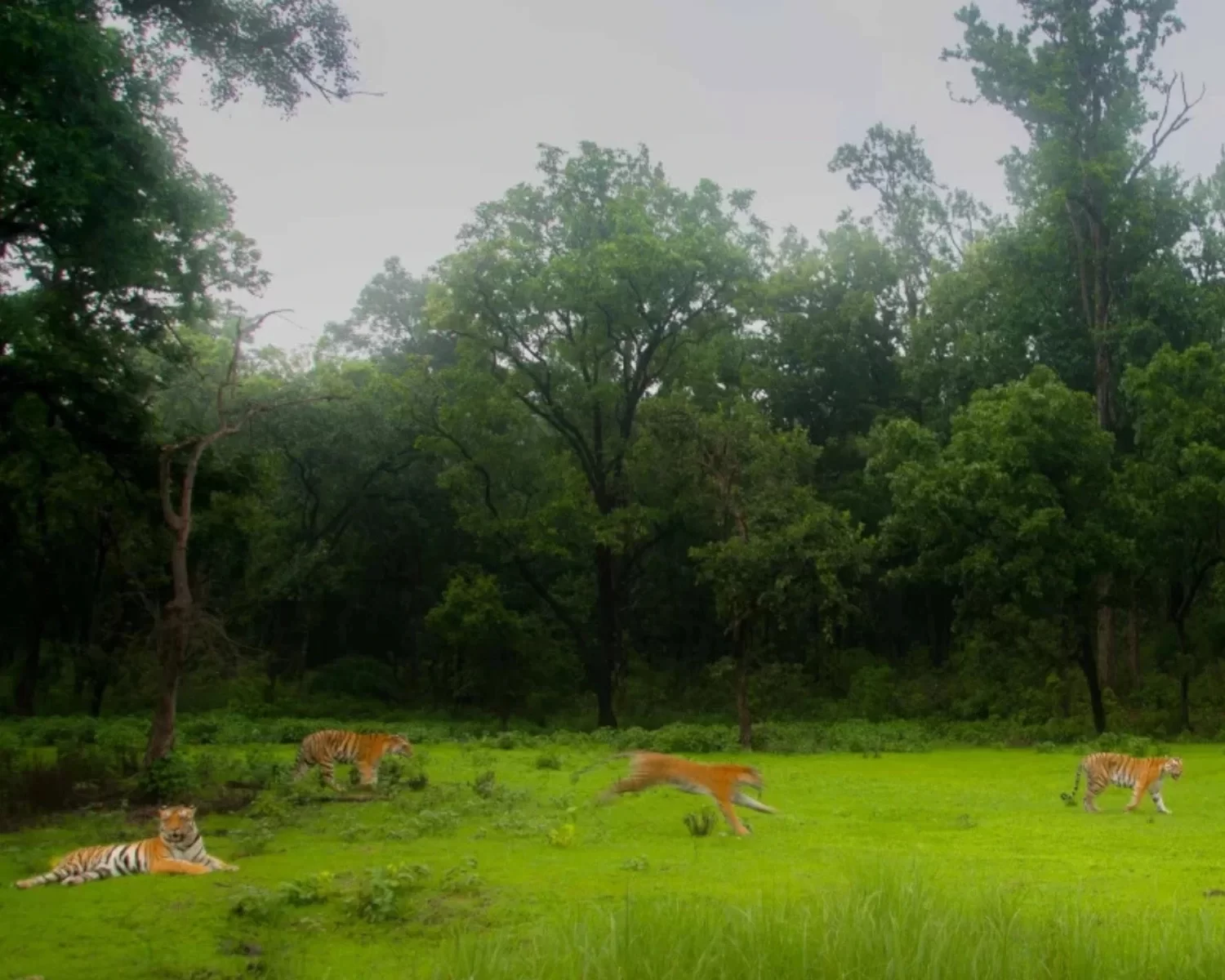
A journey through Kanha National Park is about much more than searching for a tiger. The forest experience begins with the morning mist over open meadows, alarm calls echoing through sal woodland, barasingha grazing quietly and birds becoming active as daylight reaches the forest floor.
For many first-time visitors, however, wildlife sightings also bring several questions. Is seeing a tiger certain? Which mammals, birds and reptiles may appear? Is summer better for sightings? What should visitors do when a wild mammal walks close to the safari vehicle?
This guide answers these questions while helping couples, families, photographers, wildlife enthusiasts and nature travellers enjoy a safe and responsible Kanha jungle safari.
Will I Definitely See a Tiger During the Safari?
No, a tiger sighting can never be guaranteed during a safari in Kanha National Park.
Tigers move freely across a large natural habitat. Their movement depends on territory, prey availability, water sources, weather, forest cover, breeding behaviour and human disturbance. A tiger may cross a safari track in full view, remain hidden inside tall grass or rest deep within the woodland where visitors cannot see it.
A responsible safari organiser, naturalist, driver or Kanha resort should never promise a confirmed tiger sighting. The purpose of a safari is to enter a living forest respectfully and observe whatever nature allows during that particular drive.
Your safari may still be highly rewarding without seeing a tiger. You may observe barasingha in a meadow, gaur crossing a forest trail, a dhole pack moving through the woodland or a crested serpent eagle watching from a high branch. Kanha supports tigers alongside leopards, dholes, sloth bears, gaur, barasingha, chital, sambar and many other wild mammals.
How Can You Improve the Overall Safari Experience?
You cannot control a tiger sighting, but you can plan a better forest experience by:
-
Booking more than one safari drive
-
Choosing both morning and afternoon timings
-
Listening carefully to the forest guide
-
Remaining quiet near active wildlife areas
-
Observing alarm calls and fresh tracks
-
Enjoying birds, mammals and forest landscapes
-
Keeping realistic expectations
Multiple safaris provide different routes, light conditions and natural movement. However, even several safari drives cannot guarantee a tiger.
Which Mammals Can Be Seen in the National Park?
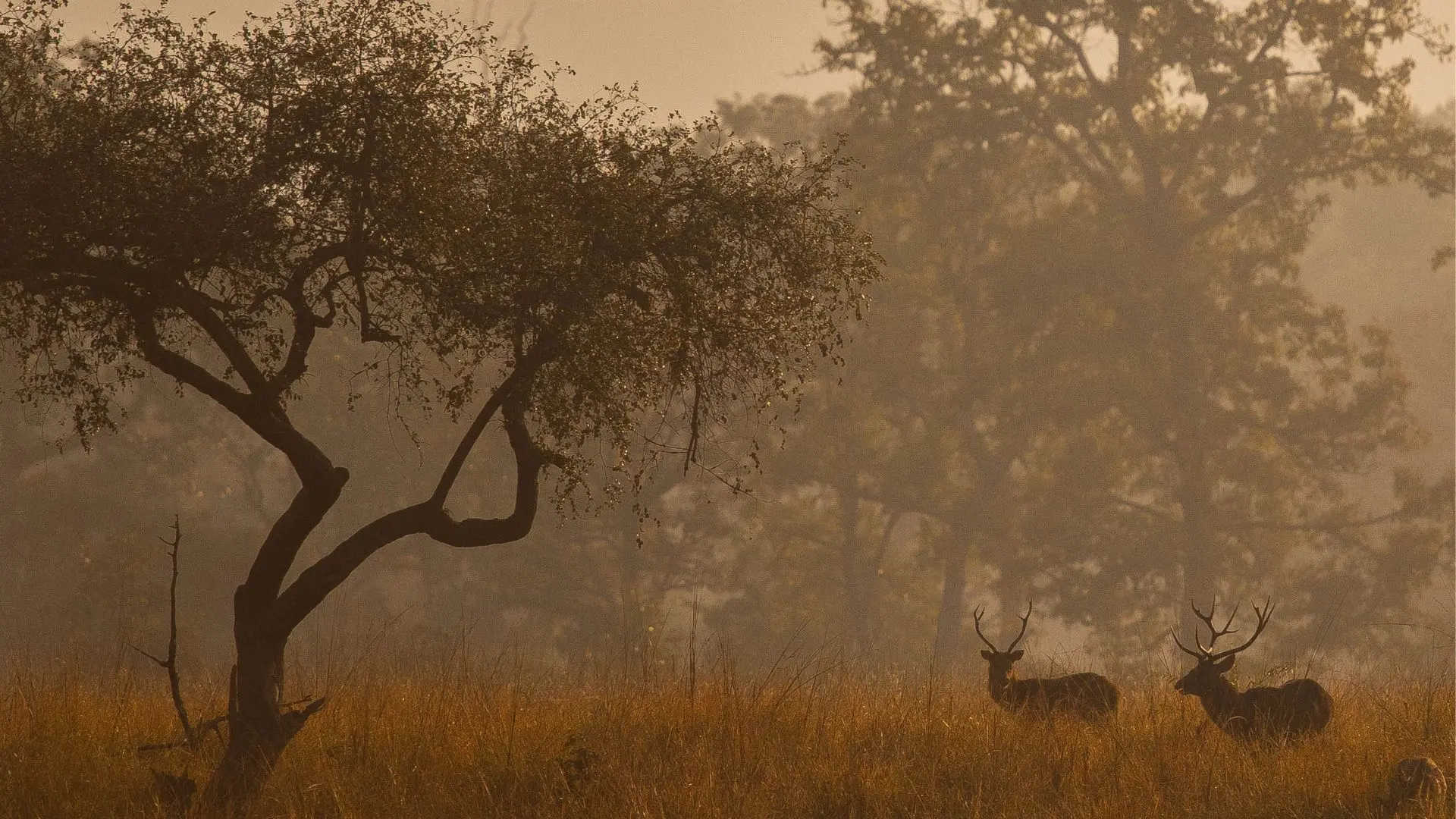
Kanha National Park supports a rich variety of forest mammals. The Bengal tiger may be the main attraction, but the reserve’s meadows, water sources, bamboo patches and sal forests support an entire wildlife community.
Mammals commonly associated with the Kanha landscape include:
-
Bengal tiger
-
Indian leopard
-
Barasingha
-
Gaur
-
Chital
-
Sambar
-
Barking deer
-
Dhole or Indian wild dog
-
Sloth bear
-
Wild boar
-
Golden jackal
-
Bengal fox
-
Hanuman langur
-
Jungle cat
-
Porcupine
The hard-ground barasingha is one of Kanha’s most important wildlife identities. Visitors may observe these graceful deer grazing in open grasslands, particularly when a safari route passes suitable meadow habitat.
Chital and langurs are also important to the forest experience. Their alarm calls may alert guides to the movement of a tiger or leopard, although every alarm call does not result in a sighting.
Gaur may be observed near meadows, woodland edges or water sources. Dholes are highly social forest predators and may occasionally be seen moving in groups. Leopards and sloth bears are present but are generally more difficult to observe because of their behaviour and habitat preferences. Kanha’s documented mammal community includes chital, sambar, barasingha, gaur, tiger, leopard, dhole, sloth bear, jackal and fox.
Enjoy Every Mammal Sighting
Do not ignore a herd of deer because you are waiting for a tiger. Each mammal has a role in the forest ecosystem.
A quiet barasingha sighting in soft morning light, a gaur standing beside dense bamboo or a dhole pack appearing unexpectedly can become one of the most memorable moments of your Kanha jungle safari.
What Birds and Reptiles Are Commonly Found There?
Kanha is an excellent destination for birdwatching. The reserve is reported to support around 300 bird species, making each safari rewarding even when larger mammals remain hidden. Recorded birds include Indian peafowl, red junglefowl, Indian roller, crested serpent eagle, Indian grey hornbill, Asian green bee-eater, drongos, woodpeckers, parakeets, kingfishers, flycatchers, lapwings, vultures and several water birds.
Birds to Watch During a Kanha Jungle Safari
Keep your eyes on open branches, grassland edges, water bodies and forest clearings. Birdwatching possibilities may include:
-
Indian peafowl
-
Red junglefowl
-
Indian roller
-
Indian grey hornbill
-
Crested serpent eagle
-
Plum-headed parakeet
-
Asian green bee-eater
-
Black drongo
-
Indian paradise flycatcher
-
White-throated kingfisher
-
Woodpeckers
-
Minivets
-
Pond herons
-
Red-wattled lapwings
-
Vultures
Morning safaris are particularly enjoyable for birdwatching because calls are easier to hear before the forest becomes warmer and busier. A pair of binoculars can help you observe distant raptors, hornbills and small woodland birds without disturbing them.
Photographers should also watch for birds near meadows and water edges instead of keeping the camera focused only on the safari road. Colourful rollers, bee-eaters and parakeets often provide excellent nature-photography opportunities.
Reptiles in the Kanha Landscape
Reptiles are usually less visible than deer or langurs. The broader Kanha landscape provides habitat for non-venomous and venomous snakes, lizards and other reptiles, but sightings depend strongly on temperature, habitat and time of day. Kanha’s grasslands are recognised as useful reptile habitat, particularly for non-venomous snakes.
Visitors should never attempt to touch, approach or identify a snake without expert knowledge. During a vehicle safari, remain seated and allow the driver or guide to manage the situation.
What Is the Best Season for Tiger Sightings?
The dry months from March to May are commonly preferred by visitors whose main interest is tiger tracking and wildlife photography.
As temperatures rise, some forest vegetation becomes thinner and water becomes increasingly important. This can improve visibility along selected routes and near active water areas. April and May are frequently considered practical months for summer wildlife travel in Kanha, but no month provides a confirmed sighting.
Winter Safari Experience
The period from November to February is suitable for:
-
Comfortable daytime temperatures
-
Green forest landscapes
-
Misty morning drives
-
Birdwatching
-
Family holidays
-
Nature and landscape photography
Winter mornings can be cold in an open vehicle. Carry warm layers, particularly for safaris during December and January.
Summer Safari Experience
The period from March to May is suitable for:
-
Wildlife-focused travellers
-
Tiger tracking
-
Forest photography
-
Better visibility through some dry sections
-
Observing activity near water sources
-
Travellers comfortable with high temperatures
Kanha’s main tourism season is affected by the monsoon, and the park’s core areas generally close as heavy seasonal rain approaches. Always verify the current operating calendar before completing Kanha jungle safari booking, because opening dates and safari access can be affected by official forest decisions and road conditions.
Are Wildlife Sightings Better During Summer?
Wildlife visibility can be better during summer, but it is not automatically better on every safari route or every day.
The forest becomes drier as summer progresses. Foliage may become less dense in certain sections, and available water sources can become important gathering points for deer, gaur and other mammals. This can help guides identify areas of recent movement.
However, summer also brings challenges:
-
Afternoon temperatures can become intense
-
Dust may affect comfort and photography
-
Mammals may rest in shade during hotter hours
-
Some forest routes may remain quiet
-
Visitors may become tired more quickly
A summer safari should be selected for wildlife observation, not because someone has promised a tiger.
Morning drives are generally more comfortable during April and May. Afternoon safaris may begin in strong heat, although the forest often feels more pleasant as sunset approaches.
Is Winter Less Rewarding?
No. Winter offers its own advantages.
The landscape can be greener, birdwatching can be excellent and the safari is usually more comfortable for families. You may enjoy barasingha, chital, gaur, langurs, raptors and woodland birds even when a tiger remains concealed.
The best season therefore depends on your travel style:
-
Choose winter for comfort, greenery and birdwatching.
-
Choose early summer for balanced weather and wildlife interest.
-
Choose late summer when wildlife visibility matters more than temperature.
How Close Can Safari Vehicles Go to a Tiger?
Visitors do not decide how close the safari vehicle may go to a tiger.
The driver and forest guide must follow the authorised route, park instructions and safe wildlife-viewing practices. A vehicle should not chase, surround, block or pressure a tiger simply to provide a closer photograph.
Sometimes a tiger may walk towards or pass close to a stationary safari vehicle. This does not mean the driver deliberately approached it. In such situations, the vehicle should remain controlled while the tiger is given sufficient space to choose its path.
There is no responsible reason to demand a closer view. Long camera lenses and binoculars allow visitors to observe wildlife without disturbing natural behaviour.
Responsible Tiger Photography
When photographing a tiger:
-
Remain seated
-
Keep movements slow
-
Avoid shouting
-
Do not use flash
-
Do not lean dangerously outside the vehicle
-
Never ask the driver to chase the tiger
-
Keep the tiger’s path clear
-
Follow the guide’s instructions immediately
A peaceful, distant sighting is far better than a close encounter created by disturbing the tiger.
What Should I Do If a Wild Mammal Comes Near the Vehicle?
Remain calm, stay seated and follow the instructions of your driver and forest guide.
Do not stand suddenly, wave your hands, shout, clap or try to attract the mammal’s attention. Quick movement and loud reactions can disturb wildlife and make the situation unsafe.
When a tiger, gaur, deer, sloth bear or another wild mammal comes near the vehicle:
-
Stay inside the vehicle.
-
Keep your hands and belongings within the seating area.
-
Speak softly or remain silent.
-
Avoid sudden camera movement.
-
Do not use flash photography.
-
Do not offer food.
-
Do not block the mammal’s direction.
-
Allow the guide and driver to manage the vehicle.
Wild mammals may appear calm, but their movement can change without warning. Recent wildlife-safety incidents have repeatedly shown that approaching, feeding or leaving a protected position near wild mammals can cause serious injury.
The safest response is to remain quiet and allow the mammal to move away naturally.
Can Visitors Get Out of the Safari Vehicle?
Visitors should not get out of the safari vehicle inside unrestricted forest areas.
Leaving the vehicle can place the visitor, guide, driver and wildlife at risk. It can also disturb the natural behaviour of nearby mammals and birds. General national-park conduct rules prohibit visitors from stepping out during safaris except at specifically designated locations and under authorised supervision.
There may be designated rest points or authorised stopping areas where visitors are permitted to leave the vehicle after receiving instructions. Never assume that an empty forest track is safe.
A tiger, leopard, sloth bear or gaur can remain hidden behind vegetation. The absence of a visible mammal does not mean the area is free from wildlife movement.
Important Vehicle Safety Rules
During your Kanha jungle safari:
-
Stay seated while the vehicle is moving.
-
Do not sit on the vehicle’s outer edge.
-
Keep children under close supervision.
-
Do not drop bottles, wrappers or food.
-
Do not request an unauthorised stop.
-
Get out only when the guide clearly permits it.
-
Return to the vehicle when instructed.
Can I Feed or Call Wild Mammals?
No. Visitors must never feed, call, tease, imitate or attempt to attract wild mammals.
Feeding changes natural behaviour and can encourage wildlife to associate vehicles or people with food. This may increase conflict, create health risks and reduce the mammal’s natural fear of human activity.
Calling a tiger, deer, langur or other mammal is also irresponsible. Loud sounds can disturb resting wildlife, interrupt feeding behaviour and affect other visitors’ forest experience.
General wildlife-tourism rules prohibit feeding wildlife and making unnecessary noise. Visitors are expected to follow designated routes and respect the forest environment.
Responsible Wildlife Behaviour
A responsible visitor should:
-
Observe without interfering
-
Keep voices low
-
Never throw food
-
Avoid playing music
-
Avoid imitating mammal or bird calls
-
Never use recorded calls to attract birds
-
Keep the safari track clean
-
Respect the guide’s instructions
-
Allow wildlife to move freely
Responsible birdwatching follows the same principle. Listen for natural calls, use binoculars and remain patient. Do not play bird-call recordings or move close to nests simply to obtain a photograph.
How to Plan a Responsible Kanha Wildlife Trip
Good safari planning begins before you reach the forest.
Complete your Kanha jungle safari booking once the travel dates and visitor details are confirmed. Check the zone, entry gate, reporting time and identification requirements. Staying at a conveniently located Kanha resort can reduce unnecessary travel before an early morning safari.
Travellers should also consider booking more than one safari. A 2-night and 3-day plan with morning and afternoon drives can provide a balanced introduction to the Kanha landscape.
When comparing Kanha National Park packages, check:
-
Number of safari drives
-
Resort location
-
Room type
-
Meals included
-
Safari entry support
-
Vehicle and guide arrangements
-
Inclusions and exclusions
-
Identification requirements
-
Cancellation conditions
Do not select a package based only on promises of tiger sightings. Choose a plan that provides a comfortable resort stay, realistic travel flow and sufficient time to appreciate the forest.
Plan Your Kanha Jungle Safari with Kanha Safari Stay
Kanha Safari Stay helps couples, families, nature travellers and wildlife photographers plan safari drives with accommodation near Kanha National Park.
Share your travel dates, number of guests, preferred trip duration and required number of safaris. The team can help you explore suitable Kanha National Park packages, resort stay options and safari-planning support according to availability.
Book early when travelling during weekends, public holidays, school holidays or popular wildlife months. Always ask for written details covering the resort, meals, safari count and package exclusions before confirmation.
Frequently Asked Questions
1. Is seeing a tiger guaranteed in Kanha National Park?
No. Tiger movement is natural and cannot be controlled. The season, zone, weather, forest cover and safari route can influence a sighting, but no safari organiser can honestly guarantee one.
2. Which mammal is Kanha National Park especially known for?
Kanha is famous for the Bengal tiger and the hard-ground barasingha. The forest also supports leopards, gaur, chital, sambar, dholes, sloth bears, langurs and other mammals.
3. Is Kanha suitable for birdwatching?
Yes. Kanha supports around 300 recorded bird species. Morning safaris can be especially enjoyable for observing peafowl, hornbills, rollers, parakeets, woodpeckers, flycatchers and forest raptors.
4. What should I carry for wildlife observation?
Carry binoculars, a camera with a suitable lens, neutral-coloured clothing, seasonal layers, drinking water and the identification used for booking. Avoid strong perfume, flash photography and unnecessary noise.
5. Should I book more than one Kanha jungle safari?
More than one safari is recommended when your schedule and budget allow. Different drives offer changing routes, light, bird activity and wildlife movement, although multiple safaris still cannot guarantee a tiger.
Experience the Best of Kanha Jungle Safari
A Kanha jungle safari becomes more meaningful when visitors appreciate the complete forest rather than measuring the trip only by a tiger sighting.
Kanha’s tigers, barasingha, gaur, deer, dholes, langurs, woodland birds, raptors and reptiles are part of one connected natural landscape. Observe them patiently, remain inside the vehicle, keep a respectful distance and never feed or call wildlife.
With timely Kanha jungle safari booking, a conveniently located Kanha resort and clearly explained Kanha National Park packages, travellers can enjoy a safer, calmer and more responsible wildlife holiday.
