
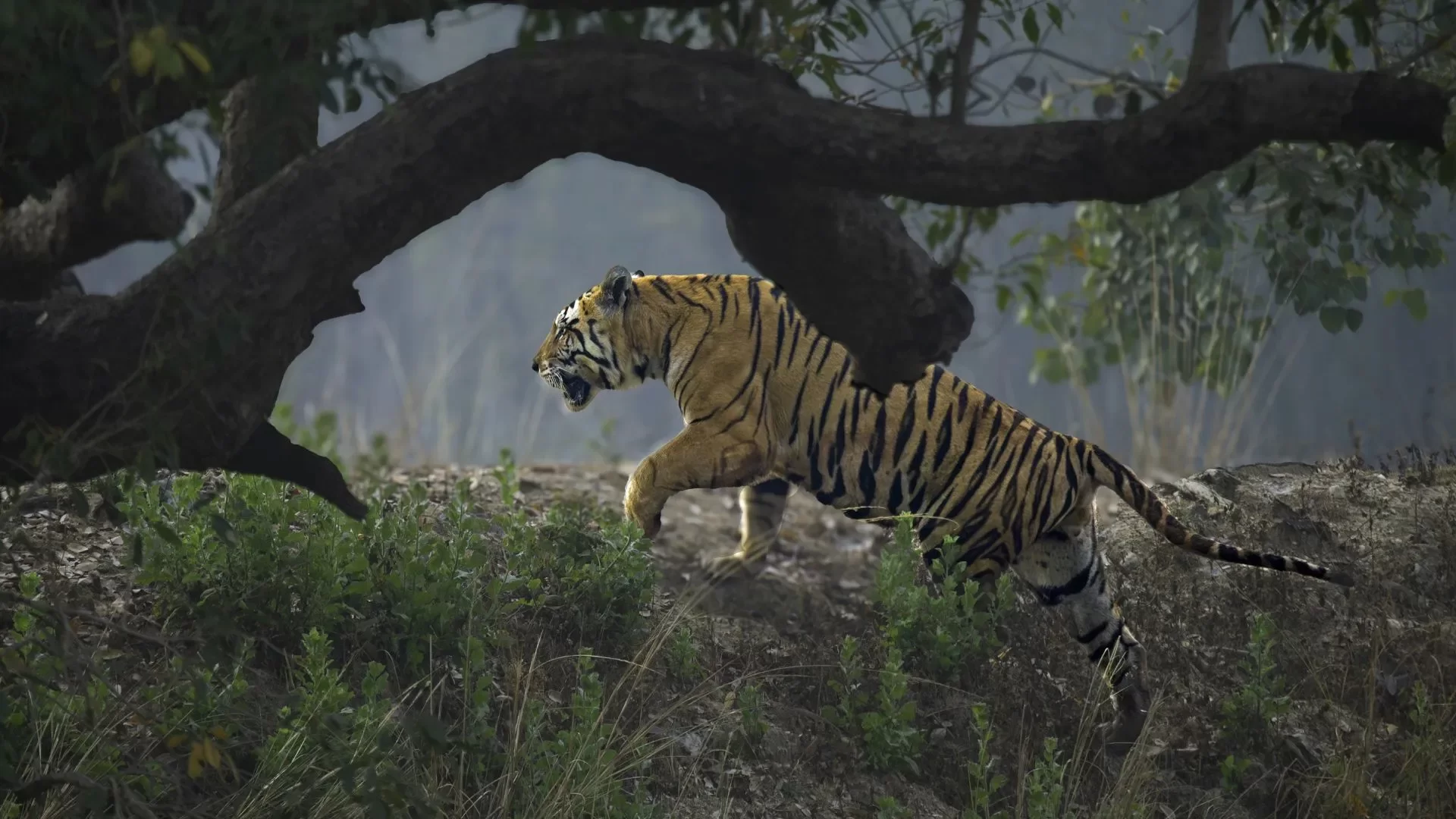
Choosing a safari gate is one of the most important decisions while planning a kanha jungle safari. Many first-time visitors select a resort without checking their permitted entry gate and later discover that they must travel a considerable distance before sunrise.
The best approach is to select your safari zone first, check the entry gate mentioned on your permit and then choose accommodation near that gate. Your decision should also consider safari availability, travel route, forest landscape and the kind of wildlife experience you hope to enjoy.
Kanha Tiger Reserve has four core tourism zones—Kanha, Kisli, Mukki and Sarhi. Its tourism network also includes Khatia, Khapa and Sijhora buffer zones, along with the adjoining Phen Sanctuary. The reserve’s recognised entry points include Khatia, Mukki and Sarhi.
A safari here is much more than searching for a tiger. The rustling Sal canopy, alarm calls echoing through bamboo patches, herds crossing open meadows and early-morning bird watching can make even a quiet drive memorable.
Which safari gate should I choose for jungle safari at Kanha National Park?
You should choose the gate specified for your booked zone and safari round. A safari permit is connected to a particular zone, date, timing and permitted entry point, so visitors should not assume that the kanha national park gates are interchangeable.
Choose Khatia Gate when staying near Mocha or Khatiya
Khatia gate kanha is a practical choice for travellers staying around Khatiya village or Mocha. Depending on the zone, round and permit category, Khatia can provide access for safaris booked in Kanha, Kisli, Mukki and Sarhi.
It is especially convenient for first-time visitors because the Khatia side has several accommodation options, local travel support and easy access to the western side of the reserve. It also serves the Khatia buffer tourism zone.
Choose Mukki Gate when staying on the Balaghat side
Mukki gate kanha is suitable for travellers staying near Mukki, Baihar or the southern side of the reserve. It is the natural entry point for many Mukki Zone permits and also serves the Khapa buffer zone.
Visitors arriving from Raipur or travelling through Balaghat may find the Mukki side more convenient. The landscape around this part of the reserve includes dense woodland, bamboo stretches, grasslands and active wildlife corridors.
Choose Sarhi Gate when staying on the northern side
Sarhi Gate is generally selected for permits connected with Sarhi Zone and the Sijhora buffer area. It can be a good choice for travellers who prefer peaceful forest routes, fewer roadside commercial areas and immersive nature observation.
The official zone table shows that entry gates can vary according to the zone, morning or evening round and whether the permit is for a full vehicle or a single seat. Always follow the gate printed on your permit rather than choosing a gate only because it appears closer on a map.
Which zone is best for tiger sightings at Kanha National Park?
No safari zone can guarantee a tiger sighting. Tigers move naturally across territories in response to water, prey movement, weather, breeding behaviour and forest disturbance. A zone that records frequent sightings during one week may remain quiet during another.
Kanha and Mukki are often requested by travellers interested in tiger tracking, while Kisli is valued for a balanced forest experience. Sarhi can provide quieter drives with rewarding opportunities for bird watching, landscape photography and observing subtle signs of wildlife movement.
Kanha Zone
Kanha Zone is known for wide meadows, classic forest scenery and habitat associated with the hard-ground barasingha. The open landscape can help visitors observe grazing mammals, raptors and distant movement across grasslands.
Kisli Zone
Kisli offers a mixture of Sal forest, bamboo cover and open patches. It is a suitable choice for first-time visitors who want to experience different habitats during one safari.
Mukki Zone
Mukki is frequently preferred by wildlife photographers and tiger enthusiasts. However, selecting Mukki should still depend on permit availability, resort location and current forest movement rather than online sighting reports alone.
Sarhi Zone
Sarhi is suited to travellers who value a quieter jungle drive. Bird watchers can listen for drongos, woodpeckers, peafowl and forest raptors while scanning clearings for deer, gaur and other mammals.
The most sensible tiger-sighting strategy is to plan more than one safari, preferably across different rounds or zones. Morning and afternoon drives offer changing light, temperature and wildlife activity. One safari provides an introduction; multiple drives allow time to understand the rhythm of the forest.
What is the difference between core and buffer zones at Kanha National Park?
The core is the reserve’s highly protected critical tiger habitat, managed primarily for conservation. The buffer surrounds or adjoins the core and provides additional habitat, movement routes and space where conservation is supported alongside compatible community activity.
National Tiger Conservation Authority guidance describes the core as an area intended to remain inviolate for tiger conservation. The buffer provides supplementary habitat for dispersing tigers and supports coexistence with nearby communities.
At kanha national park madhya pradesh, the core tourism zones are Kanha, Kisli, Mukki and Sarhi. The buffer tourism zones include Khatia, Khapa and Sijhora, while Phen is an adjoining sanctuary tourism area.
What can visitors expect in a core zone?
Core safaris follow established tourism circuits through protected forest habitat. They may include iconic meadows, water bodies, dense woodland and areas regularly used by tigers, barasingha, gaur, sambar and other mammals.
What can visitors expect in a buffer zone?
A buffer safari should not be treated as a lower-quality alternative. Tigers and other mammals do not recognise tourism boundaries, and buffer forests can form important movement corridors.
Buffer drives may feel quieter and can be rewarding for observing leopard signs, sloth bears, wild dogs, jackals, deer species and seasonal birdlife. They are also useful when core permits are unavailable or when visitors want to explore a different forest character.
For bird watching, buffer landscapes can be particularly interesting because they may combine forest edges, village-side vegetation, grass patches and water sources. These varied habitats attract both woodland and open-country birds.
How far is the safari gate from my resort?
The distance depends entirely on your resort location and the entry gate printed on your safari permit. A property advertised as being “near Kanha National Park” may still be far from your assigned gate.
Before confirming accommodation, ask the resort for:
-
Road distance to the permitted gate
-
Expected early-morning travel time
-
Vehicle reporting arrangements
-
Pickup and drop availability
-
Road conditions during your travel season
Wildmark Resort is located in Khatiya village and is described by Kanha Safari Stay as being less than one kilometre from the main Khatia entry side. This makes it convenient for guests whose safari reporting is scheduled through khatia gate.
However, a guest staying near Khatia with a permit requiring Mukki or Sarhi entry may need a much earlier departure. This is why resort and safari planning should be completed together rather than booked independently.
During kanha jungle safari booking, share your resort name with the booking team and ask them to confirm the correct reporting point. Google Maps can provide an approximate road distance, but local guidance is valuable for reporting time, gate procedures and seasonal road conditions.
Does every safari zone have tigers and other mammals?
Yes, tigers and other mammals can move through every core and buffer landscape, but their presence does not mean visitors will see them during every safari.
Kanha’s official reserve information records around 43 mammal species and about 300 bird species. Important forest residents include tigers, leopards, dholes, gaur, sloth bears and the hard-ground barasingha.
Sightings are influenced by:
-
Natural territorial movement
-
Availability of water
-
Movement of prey mammals
-
Forest cover and visibility
-
Temperature and weather
-
Morning or afternoon timing
-
The ability of the guide and driver to interpret forest signs
A tiger may remain only a few metres from the safari track and still be invisible behind dense bamboo. On such drives, visitors can enjoy fresh pugmarks, alarm calls, scratch marks and the behaviour of nearby deer or langurs.
Every zone can also offer memorable bird watching. Crested serpent eagles may watch from high branches, drongos may follow moving mammals, woodpeckers may call from Sal trunks and peafowl may appear beside open tracks. MP Tourism lists a broad range of birds at Kanha, including peafowl, racket-tailed drongos, flycatchers, woodpeckers, Indian rollers, kingfishers and grey hornbills.
A rewarding safari is not measured only by a tiger photograph. Watching gaur emerge from morning mist, hearing alarm calls travel across a meadow or observing forest birds in golden light can be equally memorable.
Plan Your Safari Gate and Resort Stay with Kanha Safari Stay
Kanha Safari Stay can help you coordinate your safari zone, gate, resort location and travel schedule in one plan. This is particularly useful for families, couples, senior travellers, photographers and first-time visitors.
Before sending an enquiry, keep the following details ready:
-
Travel dates
-
Number of guests
-
Preferred number of safaris
-
Full-vehicle or shared-seat preference
-
Resort requirement
-
Arrival route
-
Photography or bird-watching interest
Early kanha jungle safari booking improves your chances of securing a suitable zone and staying near the correct entry side. Share your details with Kanha Safari Stay to plan a comfortable forest holiday with safari and resort assistance.
Frequently Asked Questions
1. Can I enter any Kanha safari zone from Khatia Gate?
Khatia can be an authorised entry point for different core zones depending on the safari round and permit type. You must enter through the gate printed on your confirmed permit.
2. Is Khatia Gate Kanha suitable for first-time visitors?
Yes. Khatia gate kanha is convenient for many first-time visitors because accommodation, local assistance and safari facilities are available nearby. Its suitability still depends on your assigned zone and permit.
3. Is a buffer safari worth booking at Kanha?
Yes. Buffer safaris can offer peaceful forest routes, tiger movement, other mammals, bird watching and nature photography. They are useful as an additional safari or when core permits are unavailable.
4. How many jungle safaris should I book at Kanha?
Two to four safaris are suitable for many travellers. Multiple drives provide different light conditions, routes and opportunities to observe natural wildlife movement without rushing the experience.
5. Which safari timing is better for bird watching?
Morning safaris are excellent for bird calls and active woodland species, while afternoon drives provide warm light and activity around meadows and water sources. Both rounds can offer rewarding bird-watching experiences.
Choose the Right Kanha Safari Gate
The right safari gate is the one connected to your confirmed permit, selected zone and resort location. Khatia is convenient for visitors staying near Khatiya or Mocha, Mukki suits the southern side and Sarhi serves the northern landscape.
No single zone can promise a tiger sighting, and buffer forests should not be overlooked. Plan multiple safaris, stay close to the correct gate and remain open to the complete jungle experience—from tiger tracks and grazing mammals to forest calls, bird watching and changing light across Kanha’s meadows.
