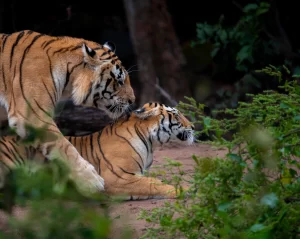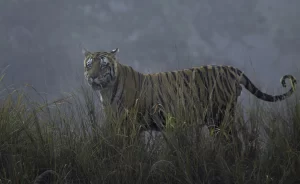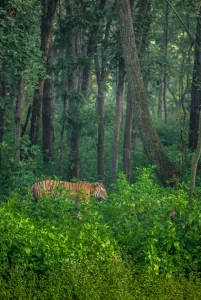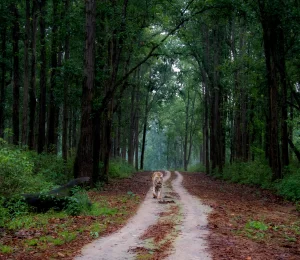

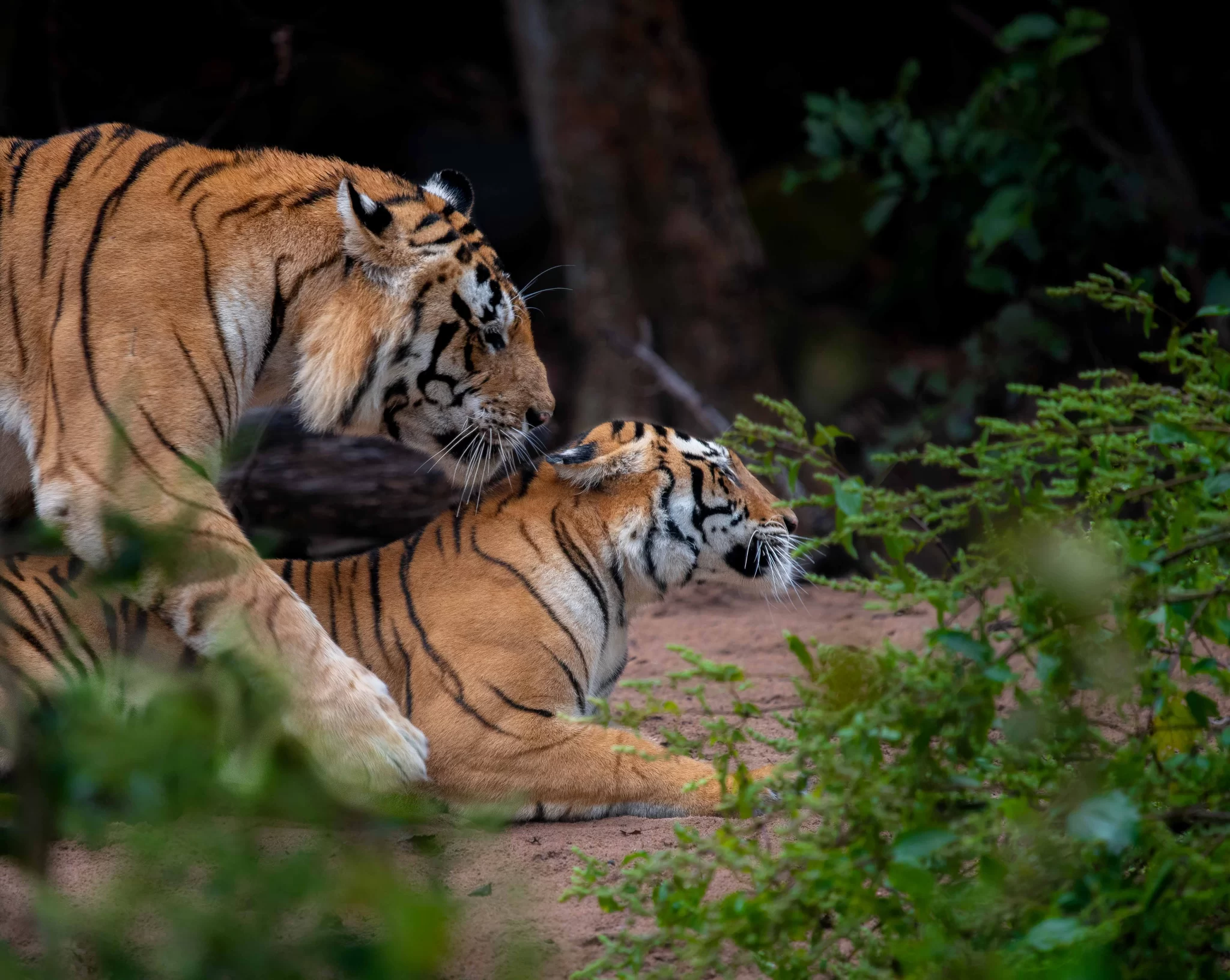
The India’s most famous tiger reserve as in the Kanha national park encompasses diverse habitats supporting a huge variety of wildlife with a healthy population of big cat
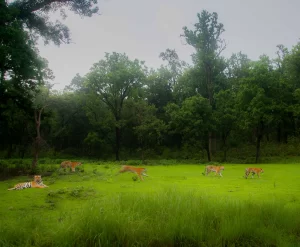
With the sun rising over mostly grasslands and the deer gazing quietly, there’s a distant roar of a tiger that sends a shiver down your spine! How about this picture?
Welcome to the Kanha National Park jungle safari where you can encounter the wildlife straight out of ‘The Jungle Book’. This is the home for Barasingha and thrilling jungle safaris where the tiger’s roar echoes through the jungle. Kanha National Park is one of India’s most iconic wildlife destinations that is famous for majestic Bengal tigers and rich biodiversity. The park also offers kanha national park safari experience with lush forests, open meadows, and rare wildlife species. We can say that this will be the must-visit place for nature lovers and enthusiasts!
Kanha National Park, also known as Kanha Tiger Reserve, is one of India’s most famous wildlife destinations. Nestled in Madhya Pradesh, this sprawling reserve is home to the majestic Bengal tiger, the rare Barasingha (swamp deer), and an incredible diversity of flora and fauna. Spanning across lush forests, rolling meadows, and bamboo thickets, Kanha inspired Rudyard Kipling’s timeless The Jungle Book.
As dawn breaks over the grasslands and deer graze silently, a distant tiger’s roar echoes through the jungle — this is the raw magic of Kanha.
History & Conservation: How Kanha Became a Model Tiger Reserve
Kanha’s story is deeply tied to India’s conservation legacy.
-
Established as a national park in 1955, Kanha was declared a Tiger Reserve in 1973 under the Project Tiger initiative.
-
Covering an area of 2,051 sq. km, it is one of Central India’s largest national parks, spreading across the Maikal range of the Satpura Hills.
-
The core zone of 940 sq. km spans Mandla and Balaghat districts.
-
Originally created to protect the endangered Barasingha, Kanha remains the only place in the world where this species thrives in the wild.
Due to the focused efforts of conservation, Kanha has now become the only place in the world with species thriving in the wild. Over time, the Kanha National Park jungle safari has become a model of conservation, offering visitors not just tiger sightings but also lessons in habitat management.
This is also one of the most well-managed reserves in India with a success ratio of tiger and prey base conservation. You may also see leopards, sloth bears, wild board, nilgai, jackals and other bird species. The landscape details of Kanha include meadows, bamboo groves, and sal forests which is a great inspiration for Rudyard Kipling’s classic ‘The Jungle Book’. Now, the Kanha tiger reserve is not only a sanctuary for tigers and leopards but also serves as a living example of India’s conservation success stories!
Today, Kanha is recognized as one of the best-managed national parks in India, serving as a model for scientific wildlife conservation and habitat management.
Why Choose a Kanha National Park Jungle Safari?
Bump along a forest trail in an open jeep…
And suddenly you witness the pug marks of a tiger! Here’s where your heart races to see the Kanha tiger reserve and every turn will bring a face-to-face encounter with wilderness.
One reason to choose a Kanha National Park jungle safari is that it’s not just about the tiger — you also get to spot leopards, wild dogs, gaur, and hundreds of bird species.
One reason to visit Kanha national park is not just about the tiger; you will also get excited by watching leopards that slink through the trees, wild dogs that hunt in packs, and the mighty gaur that grazes peacefully in meadows. Though the tiger’s roar will give you goosebumps, many moments are there to treasure the most in this place. The sight of a rare hard-ground Barasingha which is the Kanha’s crown jewel will gracefully walk in the grasslands.
Nothing for a bird lover?
Keep your binoculars ready to watch more than 300 species of vibrant Indian rollers to crested serpent eagles that adds colour to your journey!
And another reason to visit is for the national park’s beauty! Golden meadows, minty sal forests, and rolling hills that create postcard-perfect views at every corner. You can also choose among the Kanha national park zones like Kisli, Mukki, Kanha and Sarhi. These zones will promise unique sightings, thrill and retreat for your Kanha national park journey.
Find your own story worth telling!
Best Time to Visit: When to Book Your Kanha Jungle Safari
Kanha Tiger Reserve remains open to visitors from October to June, with each season offering distinct experiences. For some tourists, winter and early summer can also be considered as the best seasons for a Kanha national park safari. It is advisable to book the Kanha National Park jungle safari booking in advance for better tiger tracking, birding and scenic drives.
- October to February (Winter): This is the most popular time to visit. The weather is cool and pleasant, making it comfortable for long safaris.
- March to May (Summer): Though the weather is hot, this season provides the best opportunity for tiger sightings. Animals are more active around waterholes, increasing your chances of wildlife encounters.
- June to September (Monsoon): The park’s core zones remain closed due to heavy rainfall, but the forest rejuvenates during this time. Buffer zones may remain accessible, offering limited safari experiences.
How to Reach Kanha National Park — Air, Rail & Road
In order to reach the Kanha national park, there are two main entry points: Khatia Gate (near Mandla) and Mukki Gate (near Balaghat). Other gates like Sarhi and Kanha provide additional access. In addition, reaching Kanha National Park is convenient as it is well-connected to major cities in Madhya Pradesh and neighbouring states.
- By Air: The nearest airports are Jabalpur (160 km), Raipur (250 km), and Nagpur (300 km). Jabalpur is the most popular choice due to its proximity and regular flight connectivity. From the airport, taxis and private vehicles are available to reach Kanha Tiger Reserve.
- By Rail: The closest railway stations are Gondia (145 km), Jabalpur (160 km), and Bilaspur (180 km). Gondia is preferred for faster access, while Jabalpur has more frequent train options.
- By Road: Kanha is well-connected by road through Mandla, Jabalpur, and Raipur. Regular buses and taxis operate from these towns, and the drive itself offers scenic views of villages and forest landscapes.
Kanha Safari Zones & Which Gate to Choose
There are several safari zones, each offering a unique Kanha National Park jungle safari experience — from tiger sightings in the Kanha Zone to peaceful birdwatching in the Sarhi Zone.
- Kanha Zone: This is the most popular zone, known for open meadows like Shravan Tal and Saunf, where tiger sightings are frequent. Here you can enjoy the iconic spots like Bamni Dadar, offering panoramic sunset views.
- Kisli Zone: Located near the Khatia Gate, Kisli is ideal for families due to easy access. Leopard sightings are common in this gate, along with gaur and sloth bears.
- Mukki Zone: This zone is rich in dense forest trails and you will get high chances of spotting tigers and wild dogs. It also connects to resorts located near Mukki Gate.
- Sarhi Zone: Known for its serene landscapes and fewer tourists, Sarhi is excellent for birdwatching and peaceful safari drives.
Top Things to Do on Your Kanha Jungle Safari
Do you think Kanha is all about tigers? And we don’t have anything apart from the tiger sightings?
A trip to Kanha national park offers a treasure chest of experiences waiting to be unlocked in this forest. You can start your journey with a Kanha national park jungle safari which is the main attraction. Here the jeep winds through sal forests and open meadows to watch tiger, leopard, and barasingha.
Now, the thrill doesn’t stop! Once you step off the jeep, you will see the forest greeting you differently. You can do nature walks in the buffer zone to notice the colourful butterflies, fresh animal tracks and the calls of parakeets echoing overhead.
For birdwatchers, you can find paradise here by spotting birds from crested serpent eagles circling high to the tiny flycatchers in the branches. Once done, close your day by climbing to Bamni Dadar, a sunset point.
Here’s the moment to carry forever for the culture seekers! You can check the nearby Gond and Baiga villages for a soulful dance, tribal art, and warm hospitality. Even if you are more interested in the forest, you can check the wildlife interpretation center at Khatia gate to learn about biodiversity.
Where to Stay Near Kanha National Park (By Gate & Budget)
Kanha offers a wide range of stay options catering to all budgets and preferences. From luxury lodges to budget stays, visitors can choose based on proximity to entry gates.
- Luxury Resorts: High-end Kanha National Park resorts near Mukki and Khatia gates provide world-class amenities such as private cottages, swimming pools, spa services, and curated safari packages.
- Mid-range Hotels & Lodges: These accommodations balance affordability with comfort. Many are located close to Khatia Gate and offer well-furnished rooms, in-house dining, and guided safari booking assistance.
- Budget Stays & Homestays: For backpackers and budget travelers, simple lodges and homestays provide affordable options without compromising on the jungle experience.
- Eco-friendly Resorts: Several properties around Kanha focus on sustainability, using solar power, organic farming, and eco-sensitive architecture.
Most accommodations assist guests with Kanha safari booking, transfers, and nature activities. Choosing a stay near your preferred Kanha National Park zones ensures easy safari access and maximises your time in the wild.
Nearby Attractions from Kanha National Park
Major nearby attractions include the ancient Mandla Fort and Ramnagar Temples offering cultural insights. Bandhavgarh National Park, another famous tiger reserve, lies within driving distance, making it a perfect wildlife circuit.
The tribal villages around Kanha provide an authentic cultural experience, while the Amarkantak Hills, source of the Narmada River, offer a serene getaway.
Tips & Park Rules (Must-know for First-Timers)
Your first trip to Kanha? Be a seasoned traveler with the below tips:
- Make your Kanha safari booking early that sells fast
- Keep your ID handy at the gate.
- Dress in earthy tones as you will blend in better with the jungle.
- Pack a cozy jacket if you’re visiting in winter, morning safaris get chilly.
- Listen to your naturalist as they are the true storytellers of Kanha.
- Say no to plastic and don’t spoil the beauty
- Binoculars and a camera will double the magic.
- Expect patchy mobile signals, so disconnect to reconnect.
- Finally, stay at Kanha National Park resorts near your gate for easy access.
FAQs About Kanha National Park Jungle Safari
Q1: What is the best time for Kanha jungle safari?
October–February is pleasant, while March–May offers higher chances of spotting tigers.
Q2: How do I book a Kanha safari?
Book online via the official MP Forest website or through authorized lodges.
Q3: Which zone is best for tiger sightings?
The Kanha and Mukki zones are most popular for tigers.
Q4: How long is a jeep safari?
Each safari lasts 3–4 hours, morning and evening slots available.
Q5: Can I do a night safari in Kanha?
Night safaris are allowed in buffer zones only, not in the core area.
Conclusion Final Thoughts & How to Book Your Kanha National Park Jungle Safari
Kanha! More than a national park, it’s a feeling. From the spine-tingling thrill of hearing a tiger’s roar to the peace of watching the sunset at Bamni Dadar, every moment here is unforgettable. Whether you chase wildlife, culture, or calm, Kanha Tiger Reserve will leave you with stories worth retelling.
At Kanha, the jungle doesn’t just whisper stories — it lets you live them.
Plan your Kanha National Park jungle safari today and take home unforgettable memories of tigers, sunsets, and soulful wilderness.